
Frequently Asked Questions
Learn more about product expertise and address your concerns
- Ensure a clean, tight electrical contact at every jig; one bad contact ruins the whole rack.
- Do not overload racks or let parts shield each other — current must reach every surface.
- Keep parts clear of the cathodes; never let work touch the cathode plates.
- Anodize aluminum only — copper, brass, steel, or plated parts in the bath dissolve and contaminate the electrolyte.
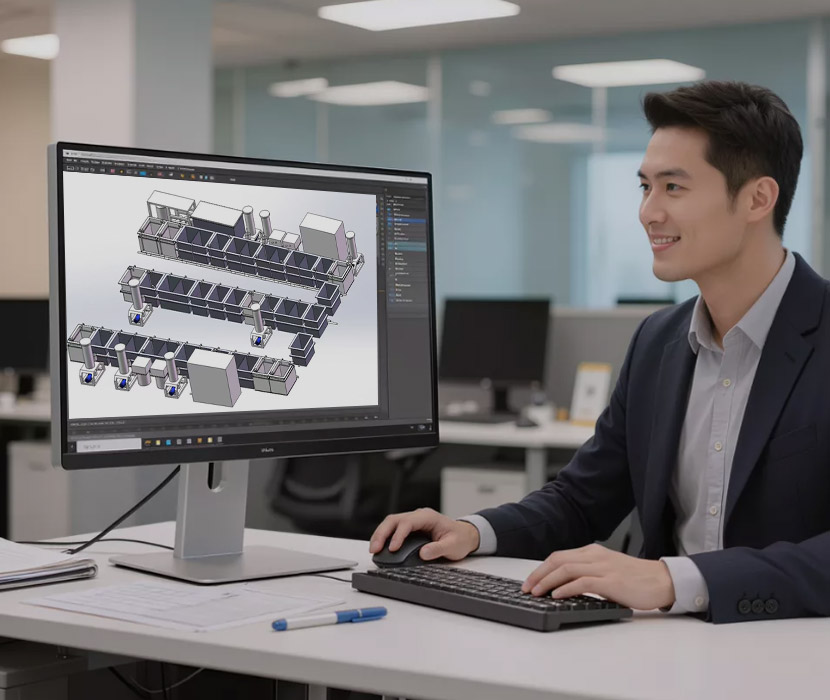
An automatic rack plating line is a programmed, conveyor- or hoist-driven system that carries racks of parts through a fixed sequence of process tanks — cleaning, rinsing, etching, plating, rinsing, and drying — without manual handling. Parts are jigged onto racks (rather than tumbled in a barrel), which suits large, fragile, odd-shaped, or high-value components and critical cosmetic or dimensional requirements.
**How it works**
A PLC-controlled transporter (overhead monorail hoist, or a "return-type" ferris-wheel arrangement) picks a rack from the load station and moves it tank to tank according to a stored recipe. Dwell times, transfer sequences, current, and temperature are all programmed, so every rack follows an identical path. Typical line sections:
These lines combine **acid pickling** (removing mill scale, rust, and oxides) with **phosphating** (forming a zinc, iron, or manganese phosphate conversion coating) in one automated sequence of tanks and transfers. The coating serves one of two main functions: a **paint/lubricant base**, or a **wear and anti-galling layer** for forming. That split largely determines which industries use them.
Request an Appointment
Please fill out the contact form and our operator will contact you to schedule an appointment.